Blog

  • Adjustable Rate Mortgages – The Basics

    An adjustable rate mortgage (ARM) has an interest rate that fluctuates periodically. This is in contrast to a fixed rate mortgage, which always has the same interest rate.

    Every ARM has basic components:

    1. An index
    2. A margin
    3. Adjustment Period
    4. An interest rate cap
    5. An initial interest rate

    The Index

    An ARM’s interest rate is tied to one of many economic indices, some examples of which are the 1-year constant maturity Treasury security, the Cost of Funds Index, or the London Interbank Offered Rate. Different indices move at different rates so know the characteristics of the index used for your ARM.

    The Margin

    The interest rate for your ARM will be calculated by adding a margin to the interest rate from the index. The margin is basically the markup charged by the lender that allows them to make a profit off of your loan, such as adding 2% to the index, where the 2% is the margin. The margin of your loan usually does not fluctuate.

    The Adjustment Period

    The Adjustment Period controls when and how often your interest rate changes. For example, if your ARM has an adjustment period of 1 year, your interest rate will be subject to change at the end of each year and your monthly mortgage payment will be recalculated to reflect this change.

    The Interest Rate Cap

    Interest rate caps are built into the loan to protect the borrower from drastic interest rate fluctuations. The caps limit how much the interest rate or monthly payment can change at the end of each adjustment period. An ARM can also have a cap for the life of the loan. For example, during the life of a loan, the interest rate can only be increased by 5%.

    The Initial Interest Rate

    The Initial Interest Rate is the interest rate that you start with at the beginning of your loan period. The length of time your loan stays at this rate is built into the loan. For example, you may stay at the initial interest rate for 1 year, 5 years, or another length of time depending on your specific mortgage. This type of ARM is generally referred to as a Hybrid ARM. The initial interest rate for an adjustable rate mortgage is generally lower than that of a fixed rate mortgage.

  • Which ARM is the Best Alternative?

    How would you like a mortgage loan where you did not have to make the whole payment if you did not want to? Or would you like a loan with an interest rate about 1% below a thirty-year fixed rate mortgage and pay zero points? Or a loan where you did not have to document your income, savings history, or source of down payment? How would you like a mortgage payment of only 1.95%? You can have all that with the 11th District Cost of Funds (COFI) Adjustable Rate Mortgage.

    Sound too good to be true? Sound like a bunch of hype?

    Each statement above is true. However, it is also only part of the story and loan officers do not always tell you the whole story when promoting this loan. Other loan officers may try to scare you away from adjustable rate mortgages. However, once you become aware of all the details of the loan, it is an excellent way to buy the house of your dreams, especially when fixed rates begin to go up.

    ARMs in General

    Adjustable rate mortgages all have certain similar features. They have an adjustment period, an index, a margin, and a rate cap. The adjustment period is simply how often the rate changes. Some change monthly, some change every six months, and some only adjust once a year. Indexes are simply an easily monitored interest rate that moves up and down over time. Adjustable rate mortgages have different indexes. The margin is the difference between your interest rate and the index. The margin does not change during the term of the loan.

    So if you have an adjustable rate mortgage and you wanted to calculate your interest rate on your own, all you have to do is look up the index in the paper or on the internet, add the margin, and you have your rate.

    Indexes and the 11th District

    The “Prime Rate” you hear about in the news is one interest rate index, although it is very rare that mortgages are tied to this index. It is more common to find adjustable rate mortgages tied to different treasury bill indexes, the average interest rate paid on certificates of deposit, the London Inter-Bank Offered Rate (LIBOR), or the 11th District Cost of Funds.

    COFI ARM Index

    The 11th District Cost of Funds (COFI) is the weighted average of interest rates paid out on savings deposits by banking institutions in the 11th district of the Federal Home Loan Bank (FHLB), which is located in San Francisco. The 11th District includes the states of California, Nevada, and Arizona.

    The COFI index moves slower than the other indexes, making it more stable. It also lags behind actual changes in the interest rate market. For example, when rates begin to go up, the COFI index may continue to decline for a couple of months before it also begins to rise.

    The Margin and Interest Rates

    The margin on the COFI ARM typically ranges between 2.25-3%.

    Monthly Adjustments Sound Scary, but…

    Although you can get a COFI ARM with an adjustable period of six months, you can get a lower margin if you go for the monthly adjustment period. Since the margin plus the index equals your interest rate, the lower margin is an advantage and most people choose the monthly adjustment.

    Monthly adjustments sound scary to the uninitiated, but keep in mind that this is a slow moving index. Most other ARMS have an annual cap of 2% a year. Since 1981, when the FHLB began tracking the index, the most it has moved during any calendar year is 1.6%. So why get a higher margin just to get a rate cap that you probably will not use anyway?

    The“life-of-loan” cap for the COFI ARM is usually 11.95%. The most recent year that this cap could have been reached was 1985. Plus, most experts do not expect a return to the interest rates of the early 1980’s when interest rates were pushed up artificially to combat the inflation of the 1970’s.

    Make Only Part of Your Payment?

    This is the really interesting feature of the loan. You do not have to make the whole payment. Each month you get a bill that has at least three payment options. One choice is the full payment at the current interest rate. A second choice allows you to pay only the interest that is due on the loan that particular month, but does not pay anything towards the principal. Finally, the third option gives you the choice to pay even less than that and is called the “minimum payment.”

    The minimum payment when you start your loan can be calculated as low as 1.95%. Keep in mind that this is not the note rate on your loan, but just a way to calculate your minimum payment.

    Deferred Interest and Amortization

    Of course, if you only make the minimum payment each month, you are not paying all of the interest that is currently due that month. You are deferring some of the interest that is currently due on the loan so you will have to pay it later. The lender keeps track of this deferred interest by adding it to the loan and the loan balance gets larger. Neither you nor the lender wants this to continue forever, so your minimum payment increases a bit each year.

    The payment cap on the loan is 7.5%, which also has nothing to do with the interest rate. All it means is the most your minimum payment can increase from one year to the next is seven and a half percent. For example, if your minimum payment is $1000 this year, next year the most it could be is $1075. This continues each year until your payment is approximately equal to the payment at the full note rate.

    Just in case, there are fail-safes built into the loan. If you continue making only the minimum payment and your current balance ever reaches 110% of the beginning balance, the loan is re-amortized to make sure you pay it off in thirty years (or forty years, whichever option you chose). Every five years the loan is re-amortized to make sure it pays off within the term of the loan.

    Stated Income and Other Features

    Many COFI lenders allow Homebuyers with good credit to apply without documenting their income, assets, or source of down payment. Of course, you have to make a twenty or twenty-five percent down payment on your home purchase. This is helpful for self-employed borrowers or those who have jobs where it is difficult to document their income. Plus, some people just do not like the bother of supplying W2 forms, tax returns and pay-stubs. Anyway, it makes for a quick and easy loan approval.

    Sub-Prime COFI ARMs

    Some people have less than perfect credit and they are used to being charged outrageous rates for past problems. Some COFI lenders offer this same loan but have a slightly higher starting payment and a higher margin. The end result is that your interest rate would be about one percent higher.

    Who Should Get This Loan?

    Most people who get the COFI ARM are purchasing a home between $300,000 and $650,000, but it is not limited to that. It is a real favorite of those working in the financial industry and those with higher incomes. One reason these groups like this particular loan is because they consider any deferred interest to be an extended loan at a very attractive rate. By making the minimum payment, they can do other things with the money.

    Homebuyers whose income has peaks and valleys, such as self-employed or commissioned salespeople also like the loan, because it provides flexibility in the monthly payment. During a slow month they can make the minimum payment if they choose.

    Another reason borrowers like the loan is because it allows for tax planning. The borrower can defer interest payments and at the end of the year, analyze their tax situation. If it serves their tax interests, they can make a lump sum payment toward any interest that has been deferred and deduct it for tax purposes.

    Skipping the Starter Home or Move-Up Home

    If you’re buying a home with the intention of living in it for only a few years before you move up to a bigger home, the COFI ARM makes sense, too. With this loan and its low start payment you can often qualify for a larger home than you can when applying for a fixed rate loan. This allows you to skip the intermediate purchase and move up immediately to the home you really want, which makes more sense and saves you money.

    If you buy a home then sell it to move up to a bigger home, you are going to have to pay a REALTOR’S® commissions and closing costs. On a $300,000 house, this would be around $25,000. If you skip buying that home and buy the home you really want, you save that money. Plus, you save money in another way. Say you live in your intermediate purchase for five years, then move up and buy another home with another thirty-year mortgage. That is thirty-five years of home loans. If you buy your ideal home now, you save five years of mortgage payments. Depending on your loan amount, that can be a lot of cash.

    Conclusion

    So, when rates start going up this is an attractive alternative to a fixed rate mortgage. It even makes sense for some borrowers when rates are low. Something we also did not mention is that most COFI lenders also give you a fourth option on your monthly mortgage statement, which allows you to pay it off quicker.


  • Where Does the Money Come From for Mortgage Loans?

    In the olden days, when someone wanted a home loan they walked downtown to the neighborhood bank or savings & loan. If the bank had extra funds lying around and considered you a good credit risk, they would lend you the money from their own funds.

    It doesn’t generally work like that anymore. Most of the money for home loans comes from three major institutions:

    • Fannie Mae (FNMA – Federal National Mortgage Association)
    • Freddie Mac (FHLMC – Federal Home Loan Mortgage Corporation)
    • Ginnie Mae (GNMA – Government National Mortgage Association)

    This is how it works:

    You talk to practically any lender and apply for a loan. They do all the processing and verifications and finally, you own the house with a home loan and regular mortgage payments. You might be making payments to the company who originated your loan, or your loan might have been transferred to another institution. The institution where you mail your payments is called the servicer, but most likely they do not own your loan. They are simply servicing your loan for the institution that does own it.

    What happens behind the scenes is that your loan got packaged into a pool with a lot of other loans and sold off to one of the three institutions listed above. The servicer of your loan gets a monthly fee from the investor for servicing your loan. This fee is usually only 3/8ths of a percent or so, but the amount adds up. There are companies that service over a billion dollars of home loans and it is a tidy income.

    At the same time, whichever institution packaged your loan into the pool for Fannie Mae, Freddie Mac, or Ginnie Mae, has received additional funds with which to make more loans to other borrowers. This is the cycle that allows institutions to lend you money.

    What Freddie Mac, Ginnie Mae, and Fannie Mae may do after they purchase the pools is break them down into smaller increments of $1,000 or so, called mortgage-backed securities. They sell these mortgage-backed securities to individuals or institutions on Wall Street. If you have a 401K or mutual fund, you may even own some. Perhaps you have heard of Ginnie Mae bonds? Those are securities backed by the mortgages on FHA and VA loans.

    These bonds are not ownership in your loan specifically, but a piece of ownership in the entire pool of loans, of which your loan is only one among many. By selling the bonds, Ginnie Mae, Freddie Mac, and Fannie Mae obtain new funds to buy new pools so lenders can get more money to lend to new borrowers.

    And that is how the cycle works.

    So when you make your payment, the servicer gets to keep their tiny part and the majority is passed on to the investor. Then the investor passes on the majority of it to the individual or institutional investor in the mortgage backed securities.

    From time to time your loan may be transferred from the company where you have been making your payment to another company. They aren’t selling your loan again, just the right to service your loan.

    There are exceptions.

    Loans above $333,700 do not conform to Fannie Mae and Freddie Mac guidelines, which is why they are called non-conforming loans, or “jumbo” loans. These loans are packaged into different pools and sold to different investors, not Freddie Mac or Fannie Mae. Then they are securitized and for the most part, sold as mortgage backed securities as well.

    This buying and selling of mortgages and mortgage-backed securities is called mortgage banking, and it is the backbone of the mortgage business.

  • WHAT’S A FICO®?

    What is a FICO® Score?

    FICO® stands for Fair Isaac & Company and is the name for the most well known credit scoring system, used by Experian. The credit bureau’s computer evaluates a complete credit profile and assigns a score, which is used to estimate credit worthiness. Each of the three bureaus (Experian, Trans Union, Equifax) employs its own scoring system, so a given person will usually have 3 separate scores. Someone with a higher score will be viewed as a better risk than someone with a lower score. Typically, scores will range from about 600 to 700 or above, although some cases will be outside this range.

    What Kind of Score Do I Need for a Home Loan?

    There are as many answers to this question as there are loan programs available. Most lenders will take the average of all 3 scores to evaluate an application. Niche loans, such as Easy Qualifier and low down payment loans will have higher FICO® requirements.

    How is My Score Determined?

    The FICO® model has 5 main elements:

    1. Past payment history (about 35% of score) The fewer the late payments the better. Recent late payments will have a much greater impact than a very old Bankruptcy with perfect credit since.
      Myth – paying off cards with recent late payments will fix things. Payoffs do not affect payment history.
    2. Credit use (about 30% of score) Low balances across several cards is better than the same balance concentrated on a few cards used closer to maximums. Too many cards can bring down the score, but closing accounts can often do more harm than good if the entire profile is not considered. BE CAREFUL WHEN CLOSING ACCOUNTS!
    3. Length of credit history (15% of score) The longer accounts have been open the better for the score. Opening new accounts and closing seasoned accounts can bring down a score a great deal.
    4. Types of credit used (10% of score) Finance company accounts score lower than bank or department store accounts.
    5. Inquiries (10% of score) Multiple inquiries can be a risk if several cards are applied for or other accounts are close to maxed out. Multiple mortgage or car inquiries within a 14 day period are counted as one inquiry.

    How Can I Raise My Score

    Your score can only be changed by the way that item is reported directly to the credit bureaus (Experian, TU, Equifax). Written confirmation from the creditor is required. It is best to make these corrections before you try to purchase a home, because you can never be sure the exact impact a change will have on your score.

    What Does This Mean to Me?

    You should have your credit reviewed BEFORE you look for a home, and work with a PROFESSIONAL loan officer to make sure your loan is based on the most accurate information.

  • Types of Mortgage Lenders

    Mortgage Bankers

    Mortgage Bankers are lenders that are large enough to originate loans and create pools of loans, which are then sold directly to Fannie Mae, Freddie Mac, Ginnie Mae, jumbo loan investors, and others. Any company that does this is considered to be a mortgage banker.

    Some companies don’t sell directly to those major investors, but sell their loans to the mortgage bankers. They often refer to themselves as mortgage bankers as well. Since they are actually engaging in the selling of loans, there is some justification for using this label. The point is that you cannot reliably determine the size or strength of a particular lender based on whether or not they identify themselves as a mortgage banker.

    Portfolio Lenders

    An institution that lends their own money and originates loans for itself is called a portfolio lender. This is because they are lending for their own portfolio of loans and not worried about being able to immediately sell them on the secondary market. Because of this, they don’t have to obey Fannie/Freddie guidelines and can create their own rules for determining credit worthiness. Usually these institutions are larger banks and savings & loans.

    Quite often only a portion of their loan programs are a portfolio product. If they are offering fixed rate loans or government loans, they are certainly engaging in mortgage banking as well as portfolio lending.

    Once a borrower has made the payments on a portfolio loan for over a year without any late payments, the loan is considered seasoned. Once a loan has a track history of timely payments it becomes marketable, even if it does not meet Freddie/Fannie guidelines.

    Selling these seasoned loans frees up more money for the portfolio lender to make additional loans. If they are sold, they are packaged into pools and sold on the secondary market. You will probably not even realize your loan is sold because, quite likely, you will still make your loan payments to the same lender, which has now become your servicer.

    Direct Lenders

    Lenders are considered to be direct lenders if they fund their own loans. A direct lender can range anywhere from the biggest lender to a very tiny one. Banks and savings & loans obviously have deposits with which they can fund loans, but they usually use warehouse lines of credit for drawing the money to fund the loans. Smaller institutions also have warehouse lines of credit from which they draw money to fund loans.

    Direct lenders usually fit into the category of mortgage bankers or portfolio lenders, but not always.

    Correspondents

    Correspondent is usually a term that refers to a company that originates and closes home loans in their own name, then sells them individually to a larger lender, called a sponsor. The sponsor acts as the mortgage banker, re-selling the loan to Ginnie Mae, Fannie Mae, or Freddie Mac as part of a pool. The correspondent may fund the loans themselves or funding may take place from the larger company. Either way, the sponsor usually underwrites the loan.

    It is almost like being a mortgage broker, except that there is usually a very strong relationship between the correspondent and their sponsor.

    Mortgage Brokers

    Mortgage Brokers are companies that originate loans with the intention of brokering them to lending institutions. A broker has established relationships with these companies. Underwriting and funding takes place at the larger institutions. Many mortgage brokers are also correspondents.

    Mortgage brokers deal with lending institutions that have a wholesale loan department.

    Wholesale Lenders

    Most mortgage bankers and portfolio lenders also act as wholesale lenders, catering to mortgage brokers for loan origination. Some wholesale lenders do not even have their own retail branches, relying solely on mortgage brokers for their loans. These wholesale divisions offer loans to mortgage brokers at a lower cost than their retail branches offer them to the general public. The mortgage broker then adds on his fee. The result for the borrower is that the loan costs about the same as if he obtained a loan directly from a retail branch of the wholesale lender.

    Banks and savings & loans usually operate as portfolio lenders, mortgage bankers, or some combination of both.

    Credit Unions usually seem to operate as correspondents, although a large one could act as a portfolio lender or a mortgage banker.

  • The Biweekly Mortgage – Who Needs It?

    Have you received an advertisement offering to save you thousands of dollars on your thirty-year mortgage and cut years off your payments? With email spam becoming more pervasive as everyone tries to get rich quick on the Internet, these ads are popping up with troublesome regularity.

    The ads promote a Biweekly Mortgage and for the most part, do not come from a mortgage lender. Exclamation points punctuate practically every claim:

    • No closing costs!
    • No refinancing!
    • No points!
    • No credit check!
    • No appraisal!
    • Save thousands!
    • Cut years off your mortgage!

    To achieve these wonderful savings all you have to do is allow half of your mortgage payment to be deducted from your checking account every two weeks. It’s easy. Of course, there is a small set-up fee and usually a transaction fee with every automatic deduction.

    Essentially, the ads are truthful in almost every respect.

    They just want to charge you money for something you can do on your own for free.

    The Basics:

    Normally, you make twelve mortgage payments a year. Since there are fifty-two weeks in a year, a biweekly mortgage equals 26 half-payments a year. The equivalent would be making thirteen mortgage payments a year instead of twelve. By applying that extra payment directly to the loan balance as a principal reduction, your loan amortizes more quickly, requiring fewer payments.

    You save money. The ads are true.

    How it Actually Works:

    You cannot simply mail in half a payment every two weeks to your mortgage lender. Since they do not accept partial payments for legal and accounting reasons, the mortgage company would just mail your half-payment back to you.

    Instead, the biweekly mortgage company is an intermediary between you and your mortgage lender. They automatically debit your checking account every two weeks for half of your mortgage payment then place your funds into a trust account. Basically, this is just a holding account for your money. In another two weeks, there is another automatic deduction from your checking account, and so on. When your mortgage payment is due, your funds are withdrawn from the trust account and forwarded to your mortgage lender.

    Since you are placing funds into the trust account faster than your mortgage payments are due, you eventually accumulate enough money to make an extra payment. The way the cycle works, this occurs once a year. he extra payment is applied directly to your principal balance, which causes your loan to amortize faster, pay off more quickly and save you thousands of dollars.

    Potential Problems with the Trust Account

    Because your funds are held in the trust account until your mortgage payment is due, there are potential dangers. Not only are your funds held in this account, but so are the funds of everyone else enrolled in the biweekly program. That is a lot of money.

    Most likely, there will be no problems.

    However, if there are accounting errors, mismanagement, or even fraud, your mortgage payment might not get made. The first hint of a problem will probably be a phone call or letter from your mortgage lender, but not until after your payment is already late. Since responsibility for making the payment rests with you and not the biweekly payment company, you may find yourself digging into your personal savings to make the payment directly — even though the biweekly payment company has already collected your funds.

    Later you can work out the trust account problem with your biweekly payment company.

    The Cost of the Biweekly Mortgage

    There is usually a set-up fee that runs between $195 and $350, depending on how much sales commission is paid to the individual or company setting up the account for you. You also pay a transaction fee each time there is an automatic deduction from your checking account and sometimes also when the payment is made to your mortgage lender. There may also be a periodic maintenance fee.

    Meanwhile, whoever controls the trust account is earning interest on your money.

    Savings of the Biweekly Mortgage

    By making principal reductions using the biweekly mortgage program, your mortgage will amortize more quickly, saving you money. How quickly your loan pays off depends on your interest rate and when you begin making the biweekly payments.

    On a $100,000 loan at an interest rate of eight percent, your first principal reduction would probably be a year from now. Assuming the principal reduction is equal to one monthly payment ($733.76), you would save $43,852 over the life of the loan and pay it off almost seven years early.

    However, you have to deduct from those savings any amounts you paid in set-up, transaction, and maintenance fees.

    No-Cost Alternatives to the Biweekly Mortgage

    Instead of hiring a company to manage your biweekly payment, you could accomplish essentially the same thing on your own for free. Just take your monthly payment, divide it by twelve, and add that amount to your monthly mortgage payment. Be sure to earmark it as a principal reduction.

    The first way you save is that you do not have to pay any fees to anyone. It’s free.

    In addition to not paying fees — using the same example as above — your total savings on the mortgage would be $45,904. Plus the loan would be paid off three months quicker than with the biweekly mortgage. The reason you save more is because you are making a principal reduction each month, instead of waiting for funds to accumulate so that you can make one principal reduction a year.

    Self-Discipline?

    The biweekly mortgage companies claim that homeowners are not disciplined enough to follow through with principal reduction plans on their own. They suggest the reason for setting up the biweekly mortgage enforces discipline upon you, and by doing so, they save you money.

    However, in this technologically advanced age, banking online and automatic deductions are readily available. You can set up your own automatic deductions including the additional principal reduction and have it go directly to your mortgage lender. Since the deduction occurs automatically, just like with the biweekly mortgages, self-discipline is not a problem. Once again, you don’t have to pay anyone to do it for you and you save even more money.

    Conclusion

    The biweekly mortgage plans do not really do anything except move your money around and charge you for it. Plus, even though the danger is negligible, you must trust someone else to hold your money for you. If you can do the very same thing for free, plus save yourself even more money by doing it on your own, why pay someone else?

    The biweekly mortgage plan – who needs it?

    If your goal is principal reduction and saving money, then it is a good plan. If you do it on your own instead of paying someone else to do it for you, then it is a great plan.

  • 3 bedroom 2 bath Home Sandpoint Home Located Base of Schweitzer Mountain

    3 bedroom 2 bath Home Sandpoint Home Located Base of Schweitzer Mountain

    Sandpoint Realty recent listing (courtesy Rain Silverhawk) is an excellent example of location-location-location. 

    Sandpoint Realty Sweetgrass Sandpoint Idaho Listing

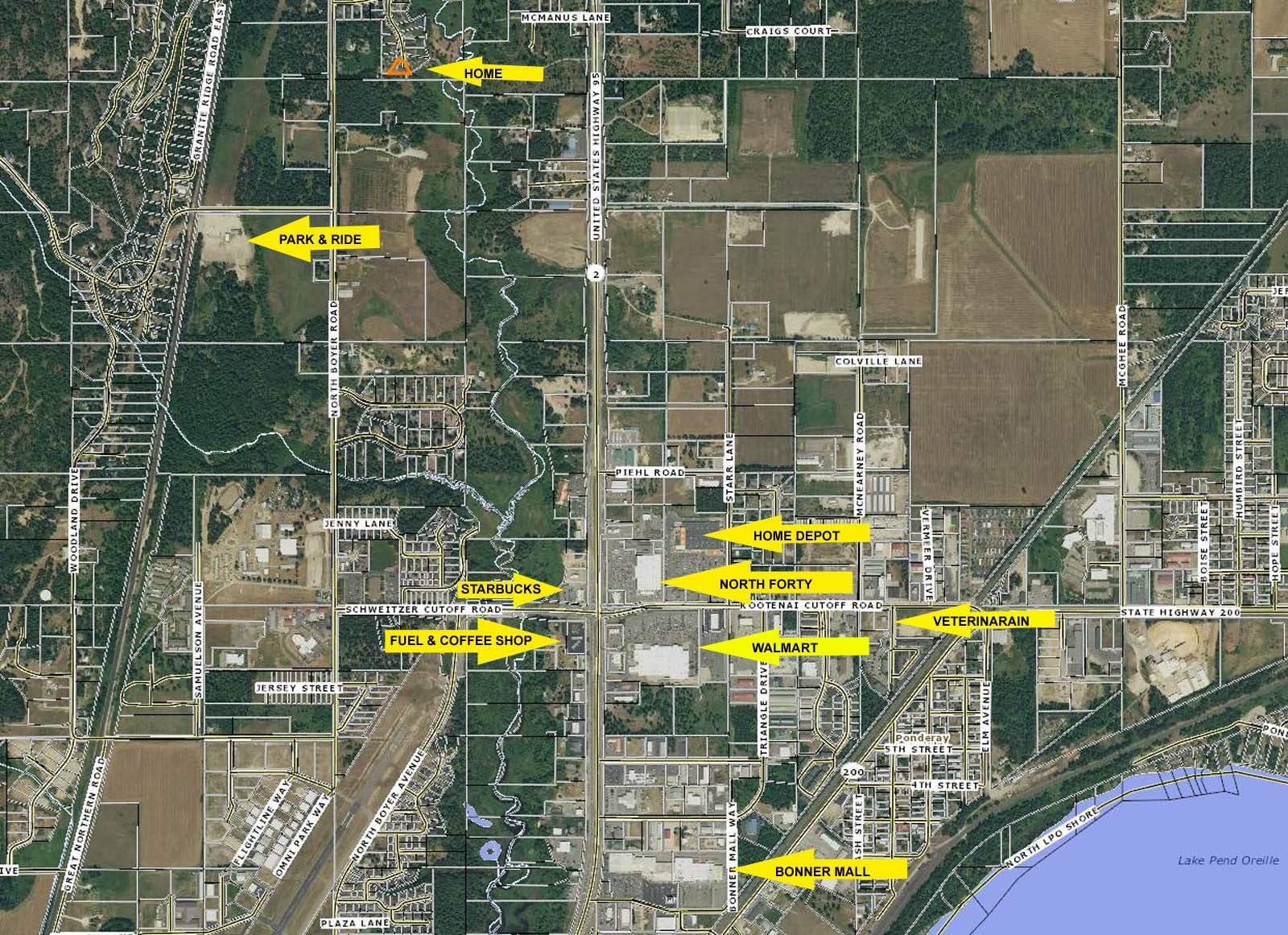
    Just at the upper portion of the aerial you can see the home at the outskirts of Sandpoint Idaho & Ponderay Idaho city limits.  Marked are some nearby well known locations.  Also within the same radius, and not marked, are several restaurants, hotels, medical, grocery, Post Office, multi screen theater, and of course a fast food haven along Hwy 95.  

    Also of note should be that Schweitzer Ski Resort Village is but 9 miles from their base Park & Ride, if one chooses to drive rather than take the shuttle.  Access to Highway 95 (highway 2 leg to Bonners Ferry) and Highway 200 (to Clark Fork and Hope Idaho) very simple and accessible.

    As seen in the short YouTube video above the home alone, on this very sought after and secluded street, is reason enough to set up a time to view, if not at least ask for additional information.  Add the benefits of these city comforts, shown on the aerial, all being less than 2 miles away, and this a must see home in Sandpoint Idaho.

    Selkirk MLS Listing 20230154    $599,000

    ‘Experience the Difference’ in working with a full time Professional Sandpoint Realty REALTOR®.  Your wants and needs will always be my priorities.  

    Mark Don McInnes

    Broker – REALTOR®

    208 255-6227

    SandpointNorthIdaho.com – North Idaho Home & Land Searches

    Sandpoint Realty LLC

    1205 Highway 2

    Sandpoint, Idaho 83864

  • Bonners Ferry Idaho Home for Sale – 4 bedroom 2 bath

    Lovely nostalgic in town Bonners Ferry Home for sale with end of road privacy.  This charming 4 bedroom, plus 5th non conforming, and 2 baths home has 1,822 sq. ft.,  and sits at end of the road on a double lot totaling .35 acres.  Close to all Bonners Ferry amenities, this is a home very much worth looking at.
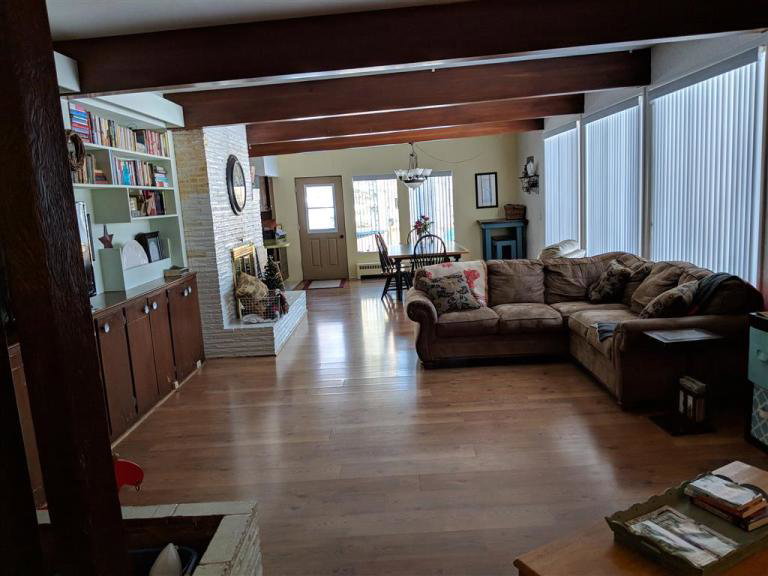
    Main floor living with kitchen opening to large dining and living room area.  Over sized windows bring the warmth of the day in with natural sunlight.  Master bedroom and 2 additional bedrooms on the main floor as well.  Step from the covered main entrance, off the 2 car carport, into hall way leading either to the kitchen or living room  Kitchen offers plenty of cupboard space and views to the large yard and tree house, along with filtered views to downtown Bonners Ferry.

    Large 4th bedroom is on lower level along with a small shop / craft room plus a pantry – storage room.  Master bath has been redone with stand alone bath tub.  Very cute bathroom.  The attic offers the hideaway bonus room, with the possible 5th non conforming bedroom.


    The double lot allows for plenty of fenced outside room with a cool tree house.  There is a covered patio and open deck.

    This home includes an in ground pool although there is no value given with winter still upon us  and can not be sure of pump house condition.

    Experience the difference ‘Living In North Idaho’ will make.  Contact me as your local North Idaho Real Estate resource.

    6537 Jefferson – Bonners Ferry – Idaho 83805

  • Sagle Idaho Pilots Getaway for Sale

    Spring is starting to show itself early in North Idaho.  Snow is disappearing from the valley floors and grass revealing itself.  With the warmer temperatures interest is increasing in this Sagle Idaho Pilots Getaway.  Interestingly there are two available and with different needs met at Timber Basin Airpark in Sagle Idaho.


    Sagle Idaho Pilots Getaway

    Want to fly into and Sagle Idaho Pilots Getawayland with your 5 star hotel room with hangar right there?  This warm cozy cabin offers just that.  Cabin has 336 Square Feet with covered porch looking across the runway to your personal hangar.  Murphy bed, full bath, and kitchenette make this the perfect base for all your North Idaho Outdoor Adventures.


     

    Selkirk MLS 20173031

    Sagle Idaho Pilots Getaway

    Frame home is the original home to the Timber Basin Airpark.  Completely remodeled in 2017 with new electric, plumbing, paint, carpet, linoleum.  Surprising large square footage at 1,372.  Large open living room, dining room and kitchen with bathrooms attached to each bedroom.  Maintain this house as your summer getaway, or with addition of cadet heaters, or something similar, turn the home into year round living.

    A hangar is approved to be built across the runway from the home.  42 X 50 maximum footprint allows for plenty of inside room.

    Selkirk MLS 20172777 $189,000.00

    Included with either listing is 1/14 share to Timber Basin Airpark.  2,300 foot runway and plans for pilot lounge.  Airpark owns approximately 80 acres which each membership of Timber Basin Airpark has shared ownership.  Pilots license, whether active or not, is required to purchase at Timber Basin Airpark.

    Take a look at either one of these fantastic opportunities now.  Be ready for the spring and summer months rather than waiting.  Beautiful Lake Pend Oreille Bottle Bay and Garfield Bay only minutes away.  Downtown Sandpoint Idaho just across the Longbridge.

  • Sandpoint City Homes for Sale February 2018 – ‘83864’

    Sandpoint City sits within the zip code of 83864.  A very large area, with so much diversification it is very difficult to give any one single report that is accurate to all that is available in the 83864 area code.  Currently there are 32 Sandpoint City Homes for Sale.  Basic criteria for search results below.

    Criteria, for Selkirk Multiple Listing Search, MLS, is basic.  $750,000 maximum list price.  1 bedroom 1 bath minimum.  Searched as ‘in Sandpoint City’.  Single Family, Condos, Townhouses all included.  The search results do not include ‘For Sale by Owner’ or Coeur D’ Alene MLS results.  The results do show the trend though, that will be consistent without those results added in.

    Sandpoint City Homes for Sale

    January 2016 showed 4 homes sold.  Median Price of $153,000.  120 days on market.  January 2017 showed 2 homes sold with a Median Price of $174,500 and 66 days on Market.  An impressive 14Sandpoint City Homes for Sale% increase in ‘Sold’ price for the one year.
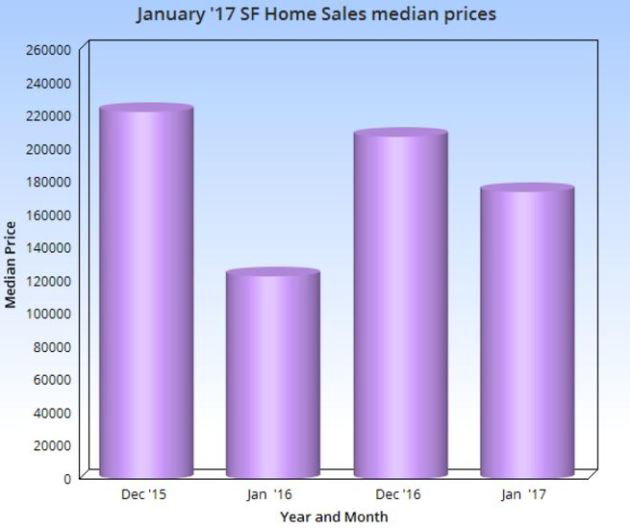
    1st quarter 2016 has 20 homes being sold with a median sold price of $209,000.  And 125 days on market.  1st quarter 2017 shows 18 homes sold with modest increase for median sold price of $218,000.  98 days on market.

    January 2018 has me shaking my head.  I went back twice to double check the results, along with active presently available.  8 homes sold.  Double that of 2016 and 4 times as many 2017.  Median sold price of $230,000 with days on market at 122.  An impressive 24% increase in median sold price.  With the 8 homes sold this January, Sandpoint City is easily on track to surpass sales for 1st quarter of both 2016 and 2017.

    Current inventory of 32 with January Sold’s at 8, along with the 122 days on market shows a 4 month inventory.  What is phenomenal is the median listing price at the current time.  $314,450.00.  While not the sold price, it is 44% above the median sold price of 2017’s $218,000.00.  Incredible.

    I do not for see Sandpoint City Home Sales slowing.  I question whether they can sustain, or realize, the jump in market price that is showing between current listing price and even sold’s of just one month ago.  While great for sellers it is putting a strain on buyers and the market in general.